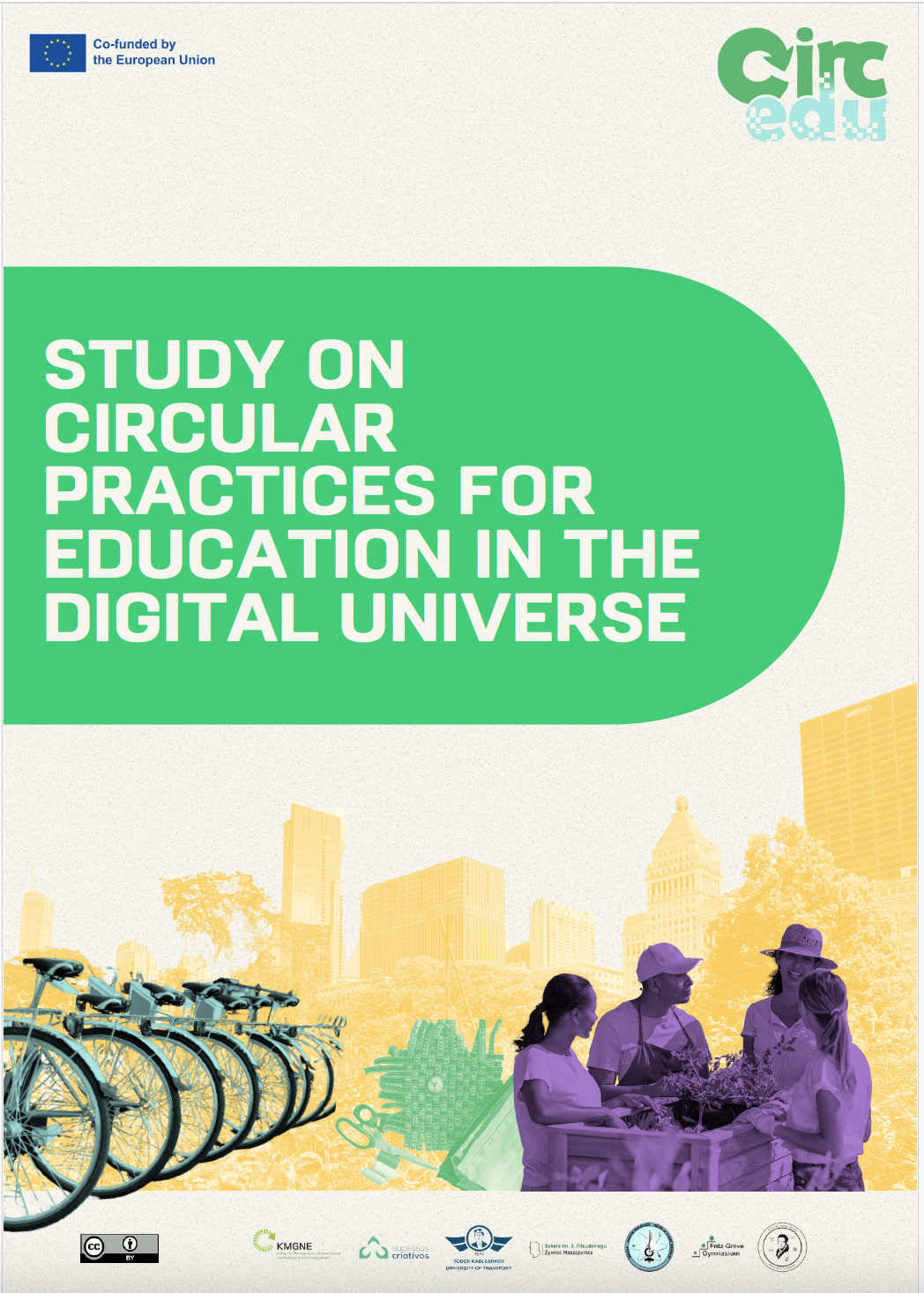
The CircEdu project has published a comprehensive study on the current state of Circular Economy (CE) education in four European countries: Germany, Greece, Poland, and Türkiye. The report is based on surveys conducted with teachers and school representatives and offers insights into curricular integration, teaching methods, available resources, and institutional support for CE education.
Key findings include:
- Poland demonstrates the most developed and consistent approach to CE topics, with broad student engagement and partnerships with external organizations.
- Türkiye exhibits strong potential, particularly in digital and creative project-based approaches.
- Germany and Greece face challenges related to resource limitations and curriculum rigidity, though teacher interest in CE is evident.
- Common barriers across all countries include a lack of teacher training, inadequate educational materials, and insufficient policy frameworks.
- There is a shared call for interdisciplinary learning, more flexible curricula, and increased cooperation with external stakeholders.
This study serves as a foundation for the next stages of the CircEdu project, including the development of a capacity-building programme for educators and the launch of a European knowledge hub dedicated to CE education.
Download the full report in the project languages here to explore how CE principles can be more effectively integrated into school systems.